SMS Laser & Fabrication
Turret Punching

CNC Turret Punching for Sheet Metal Parts

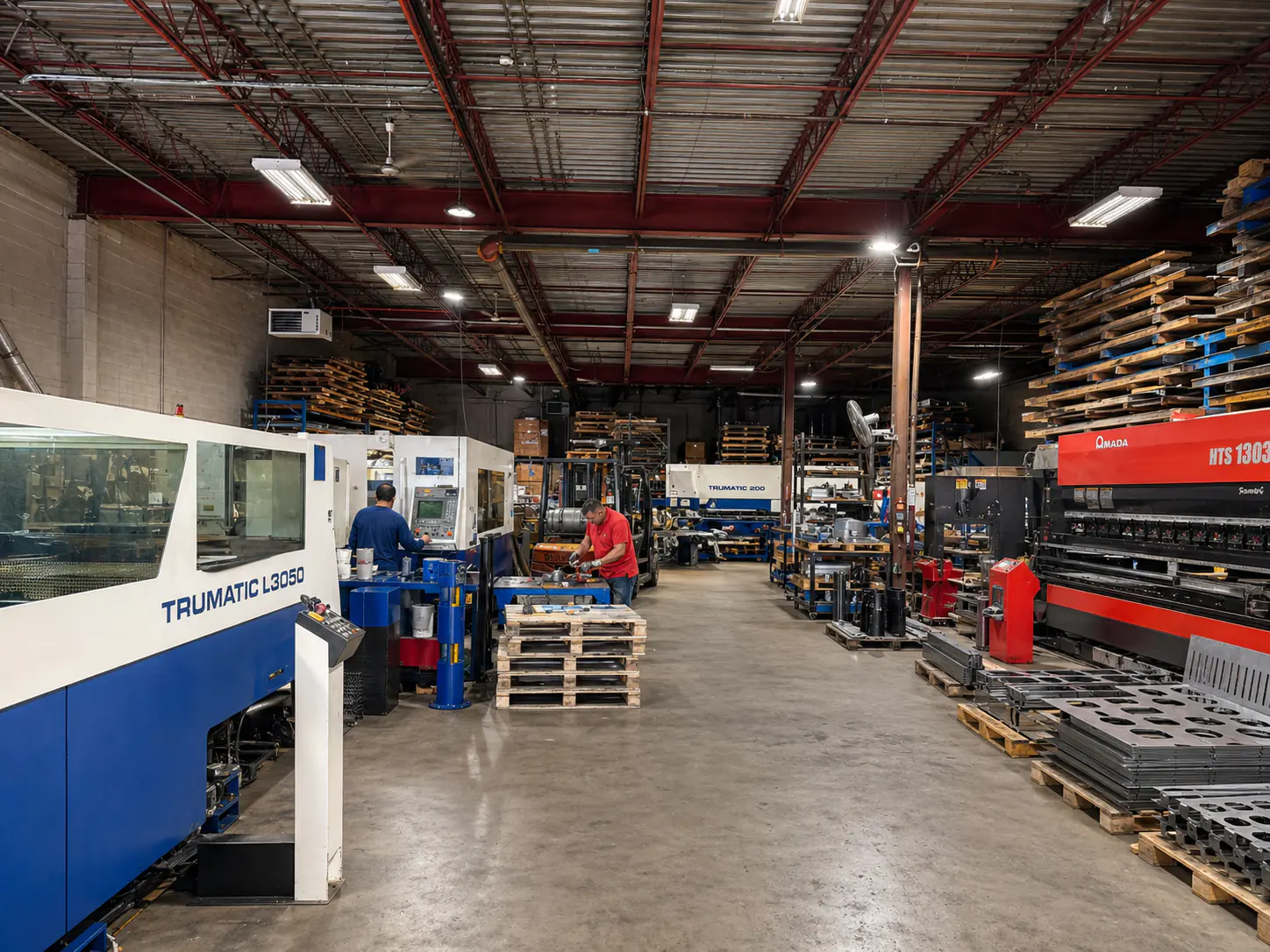
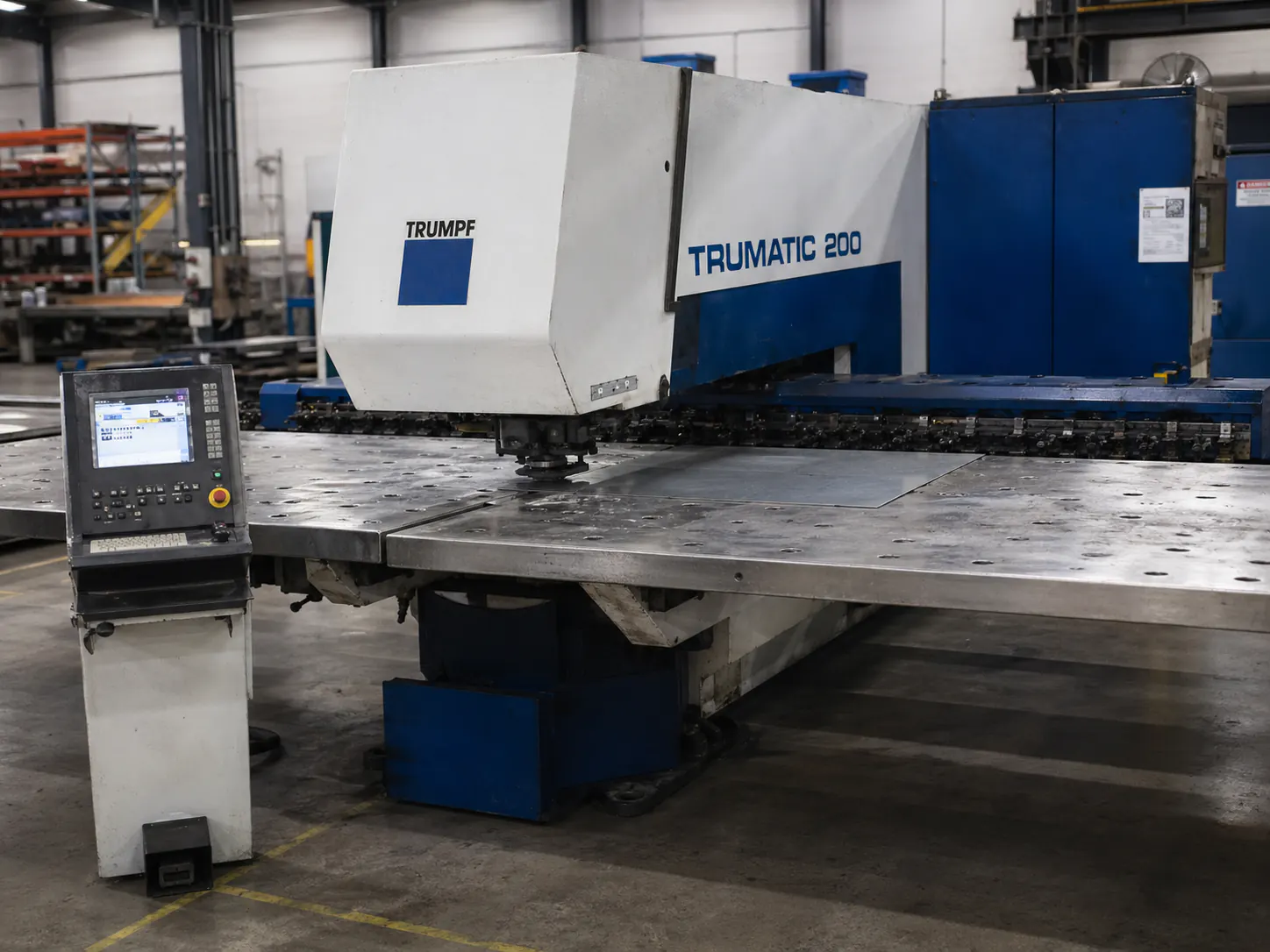
CNC punching and stamping services on the TRUMPF Trumatic 200 in our Brampton shop. Repeating holes, louvres, and form features — faster than laser when the part repeats.

  • TRUMPF Trumatic 200 Turret
  • Louvres & Embosses
  • High-Rate Repeats
Punching & Stamping at SMS Laser & Fabrication
Overview

Punching & Stamping.

Turret punching uses an indexing tool head to stamp hole patterns, louvres, and formed features into sheet metal at production speed. At our Brampton shop, parts with hundreds of repeating holes — perforated panels, ventilation grilles, electrical enclosures — beat laser cutting on raw cycle time by 5 to 10×.

What it's used for

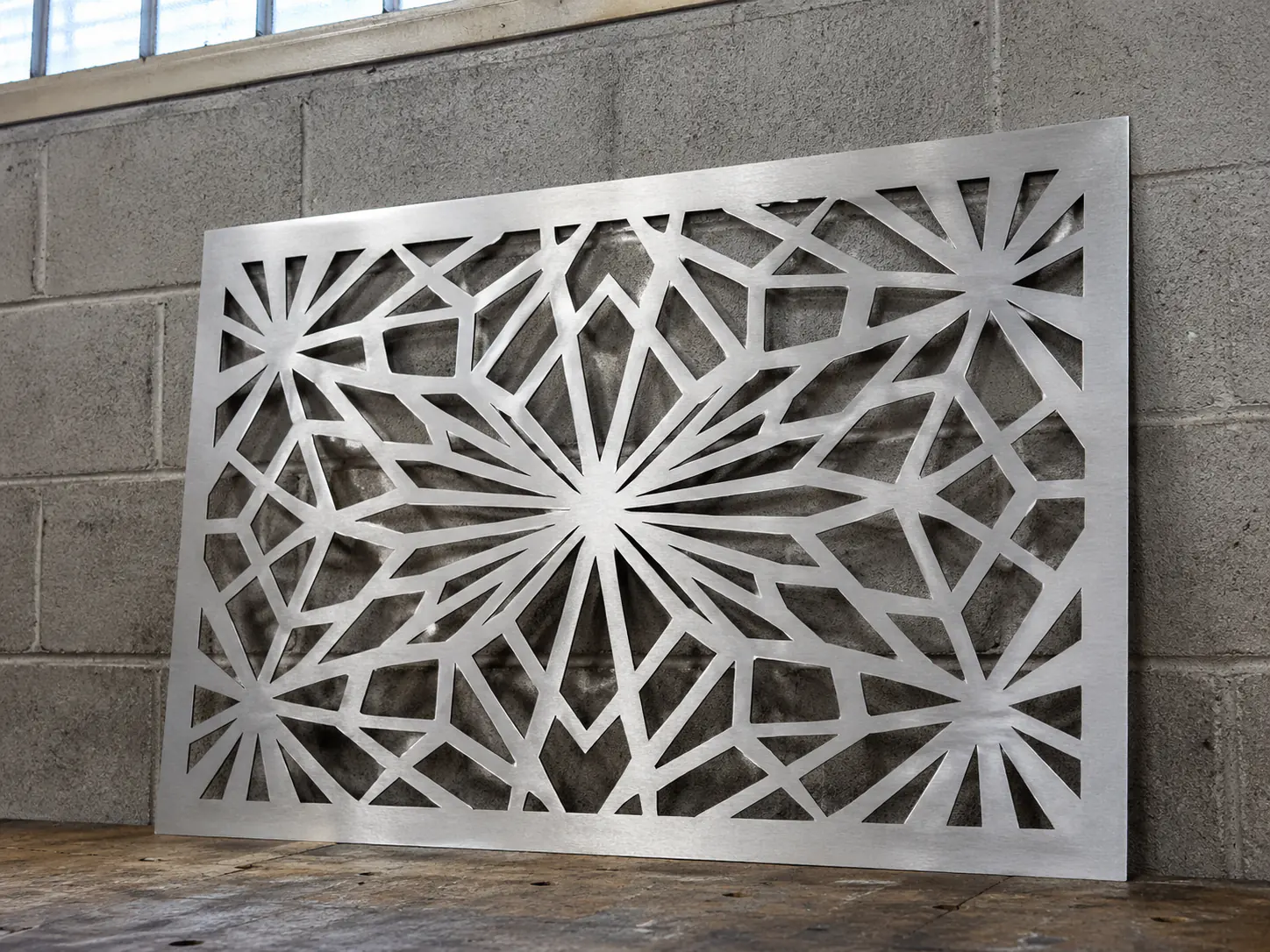
Perforated panels (HVAC grilles, speaker grilles, security screens), electrical enclosure backplates, ventilation louvres, lance-and-form features (catch tabs, deburred holes, extruded threads), and any high-volume hole pattern where laser cycle time would dominate cost. Often combined with laser cutting on the same part — punch the repeating holes, laser the unique geometry.

Why people use it

When hole count exceeds about 50 per part, punching outpaces laser cutting on raw cycle time. Form-tools (louvres, embosses, extruded holes) happen in the same setup — features that would otherwise need a second operation come off the press in one stroke. Tooling is reusable; programs scale linearly with quantity, so larger runs get cheaper per piece.

What we hold to

±0.005″ hole-to-hole positioning across the full bed. Mild steel, stainless, aluminum up to 0.250″. 200+ tool stations covering standard rounds, slots, squares, hex, plus form tools. Same drawings the laser uses; programs stored for re-orders to the same tolerances.
Machine & Material

The Turret and the Pattern.

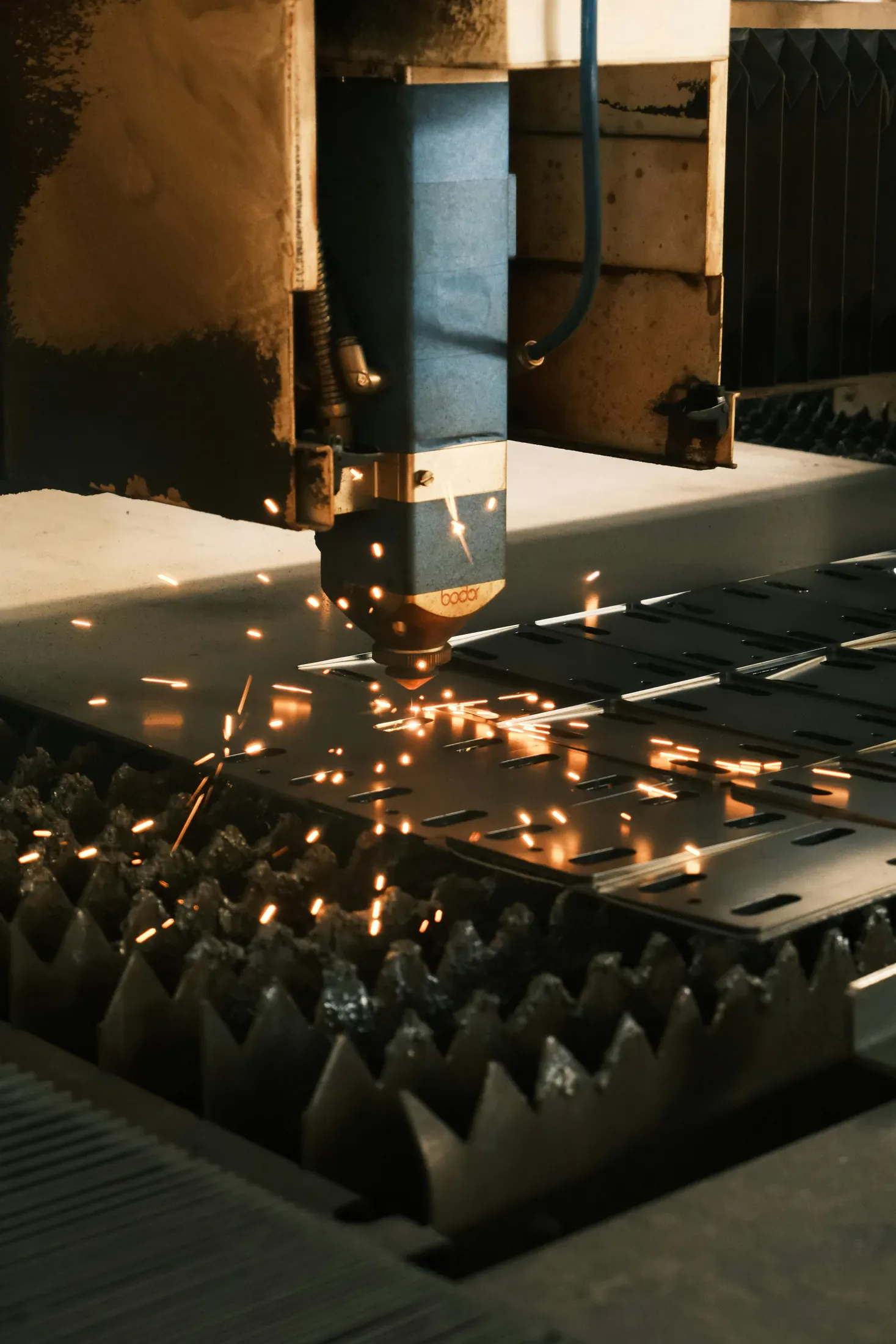
Every punching job runs on a TRUMPF Trumatic 200 turret punch. 200-plus tool stations, form tools for louvres and embosses, single strokes per feature. Below: every metal we punch, in the gauges that hit cleanest.

View the Trumatic 200 Spec Sheet
TRUMPF Trumatic 200 — CNC Turret Punch
Tonnage
20 t
Sheet
80×50"
Stations
15-Turret
Speed
265 SPM
Materials Handled
M01
Mild Steel
20 GA – .25"
M02
Stainless Steel 304/316
20 GA – .125"
M03
Aluminum 6061/5052
20 GA – .125"
M04
Galvanized Steel
20 GA – .25"
M05
Pre-Painted Steel
20 GA – .125"
Workflow

From File to Pattern.

A punching job touches five hands between your CAD upload and the inspection bench. Here's exactly what happens — and where it happens — inside the shop.

Talk to a Fabricator
01
Send Drawing + Hole Pattern

DXF, DWG, or STEP file with hole pattern, louvre layout, and any formed features called out. We map your features to standard or custom tooling.

02
Tooling Selection

Standard tools assigned for common shapes; custom tooling specified for unusual hole shapes or louvre profiles. Tooling cost included in the quote.

03
Programming + Nesting

We program the punch sequence and nest your parts on stock sheet for maximum material yield. Sheet utilization typically 75-90% on production work.

04
First-Article Punch

First sheet punched and verified — hole locations, louvre depth, burr height all checked before the production lot runs.

05
Production Run + Inspection

Production lot runs at programmed throughput. In-process spot checks; final inspection before pickup or freight. Punch-and-die clearance maintained throughout.

Recent Work

Off the Turret.

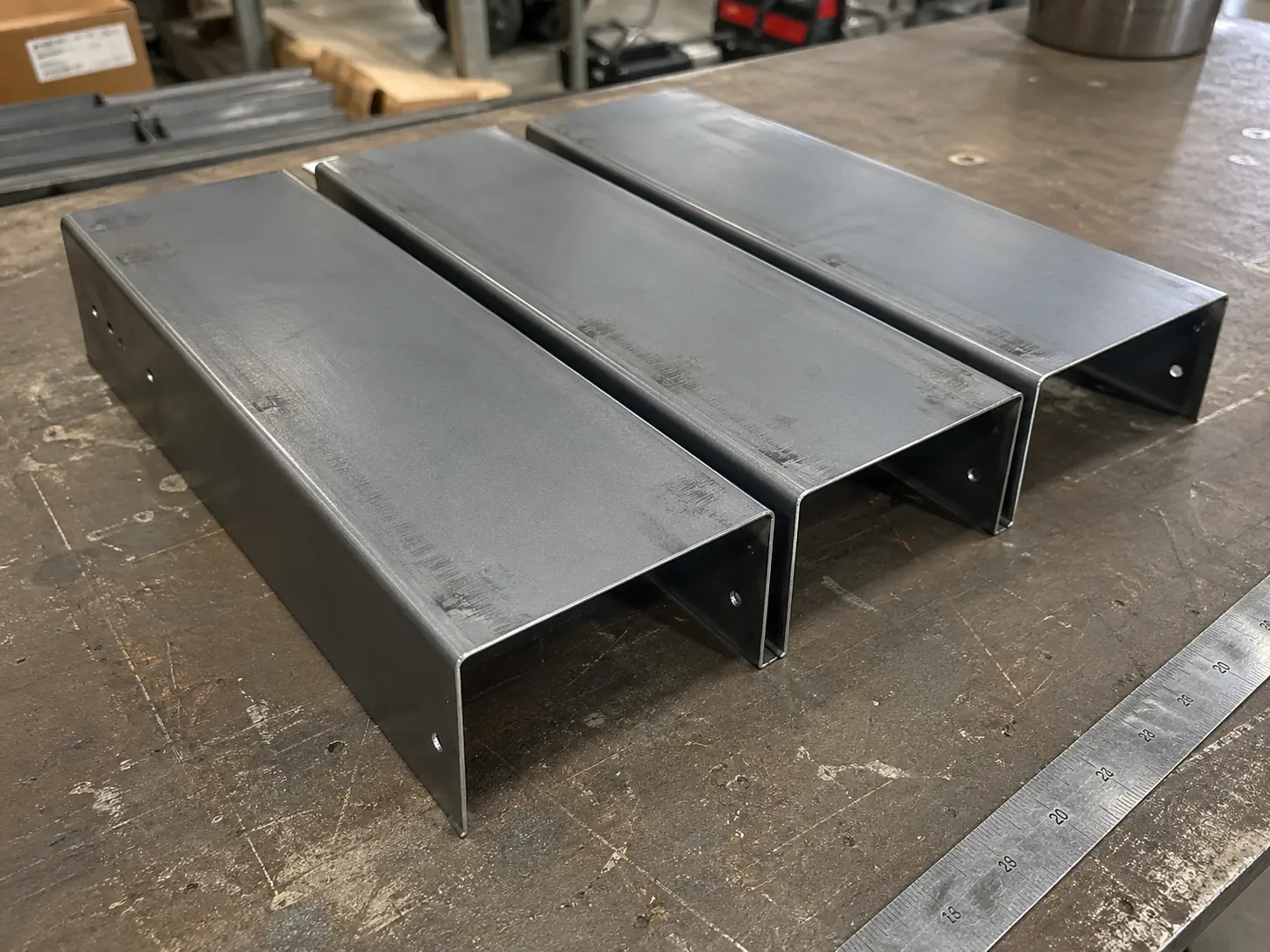
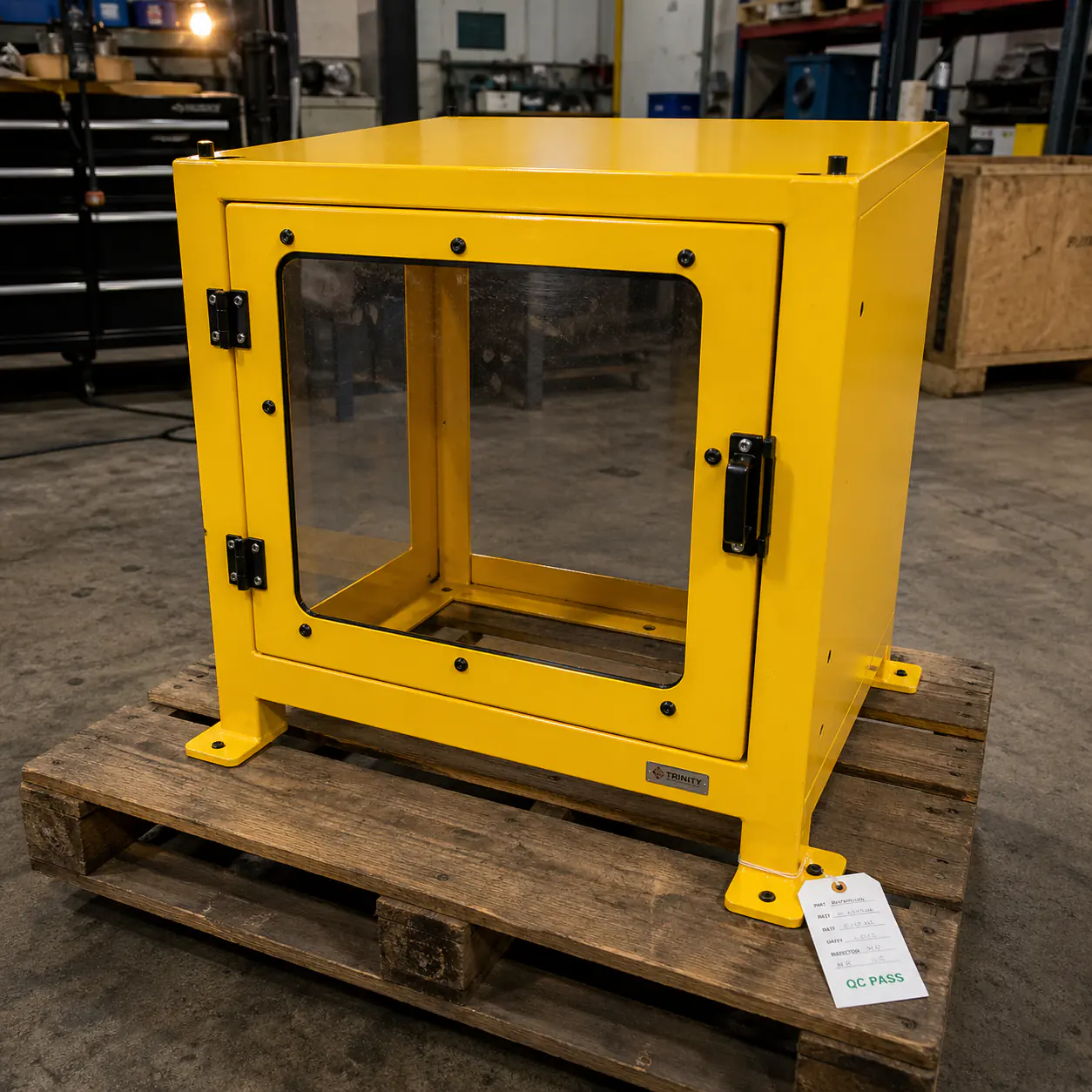
Recent punching work that came off the Trumatic — louvre panels, perforated guards, electrical enclosure backplates, formed-in-sheet stiffeners. Production runs from a single sheet through 10,000-piece lots.

Where Buyers Get Stuck

What's Slowing Your Decision?

Three worries we hear from buyers running high-volume pattern work. Here's what each one sounds like — and the honest reply, with the proof.

Buyer Objections
Three Worries
Worry 01

Laser cycle time on hundreds of louvres per panel kills my margin.

The Honest Reply

The turret punch forms louvres directly — one stroke per louvre. Ten to a hundred times faster than laser on repetitive louvre patterns, and the louvre is formed in the same hit, not a secondary operation. Standard louvre tools in stock, custom shapes on request.

Why You Can Trust This
  • Louvres formed directly in the punch — no secondary operation
  • 10–100× faster than laser cutting on repetitive louvre patterns
  • Standard louvre tools in stock; custom shapes on request
Worry 02

My pattern work gets quoted the same as a one-off laser cut.

The Honest Reply

On a turret punch, knockouts, conduit punches, and vent perforations all run in one program — single strokes per feature, not laser-traced one at a time. PEM fastener prep happens in the same operation. Cost per hole drops sharply once you cross 50 hits per panel.

Why You Can Trust This
  • Knockout patterns, conduit punches, vent perforations in one program
  • Threaded inserts and PEM fastener prep done in the same operation
  • Faster than laser for parts with high punch counts
Worry 03

Setup fees eat my margin on production runs of 1,000+ panels.

The Honest Reply

Setup is per-program, not per-part. Once we tool the first sheet, the rest of the lot runs at programmed throughput — no per-part fee creeps in. Sheet-utilization nesting saves 8–12% on material yield versus shear-and-mill workflows.

Why You Can Trust This
  • Production runs of 1,000–10,000 panels at programmed throughput
  • Sheet-utilization nesting to maximize material yield
  • Setup once, run the lot — no per-part setup fees
Pulled From Real Calls
Talk to a Fabricator
FAQ

Common Questions.

Quick answers about punching & stamping at SMS. Anything missing? Send a sketch.

Talk to a Fabricator

Punching wins on parts with hundreds of identical holes, slots, or formed features. The cycle time per punch is one stroke; laser would cut each feature individually. Forms (louvres, embosses, lance-and-form) only happen on the punch — laser can't do them.

Laser wins on complex contours, thick material, low-quantity custom work, and parts with non-standard hole shapes. Tooling-free — no setup fee for unusual geometry. We route the part to whichever machine fits best.

Yes — that's one of our standard workflows. Some features punch faster; others laser-cut faster. We route each feature to the best tool. Your part may go through both machines on the path to a finished sheet.

Louvres, countersinks, embosses, lance-and-form features, dimples, and custom shapes. The turret forms these directly in the sheet without secondary operations. Standard louvre and form tools in stock; custom tooling for high-volume production runs.

Up to .25" on mild steel, .125" on stainless and aluminum. For thicker material we route to the laser. Material thickness drives punch-and-die clearance, which drives burr height — we tune the setup to your material spec.

From our Brampton shop we deliver punched panels, perforated parts, and stamped components across the Greater Toronto Area — Mississauga, Toronto, Vaughan, Oakville — and ship across Ontario for production runs. Free GTA pickup at our facility; most production turret work ships in 5–7 working days.

Ready to Punch

Quote a Punching Job.

Louvres, perforations, embosses — faster than laser when the part repeats. Send your pattern and we'll quote both routes so you see the trade-off.

ISO 9001:2015 Certified · Brampton, Ontario
Pairs Well With

Most punching & stamping jobs need at least one of these too — tap any to open the service page.

Related Topics

Materials, processes, and buyer searches connected to this page.

Punching & Stamping — Explore Further

Where this service goes next