What it's used for
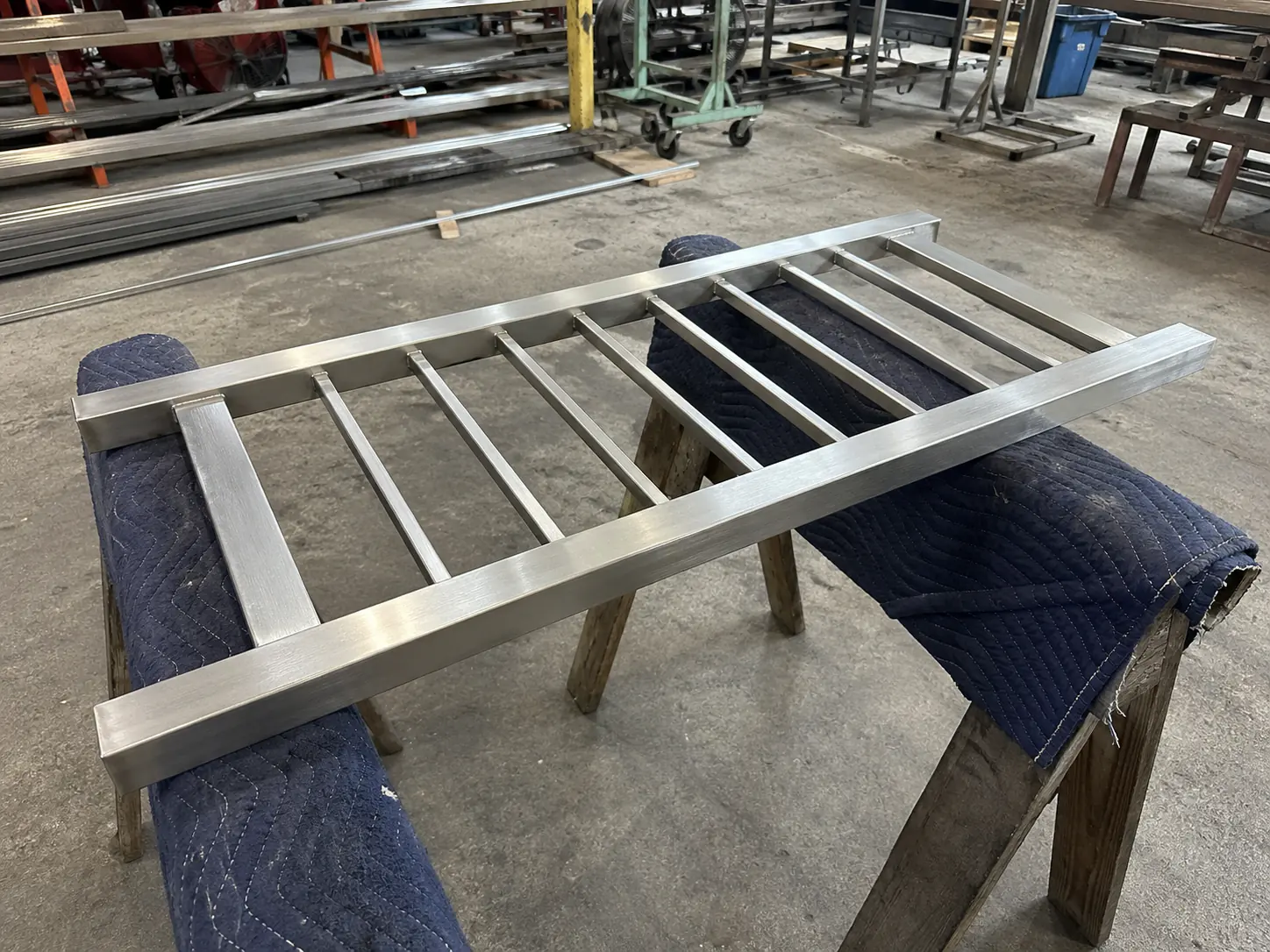
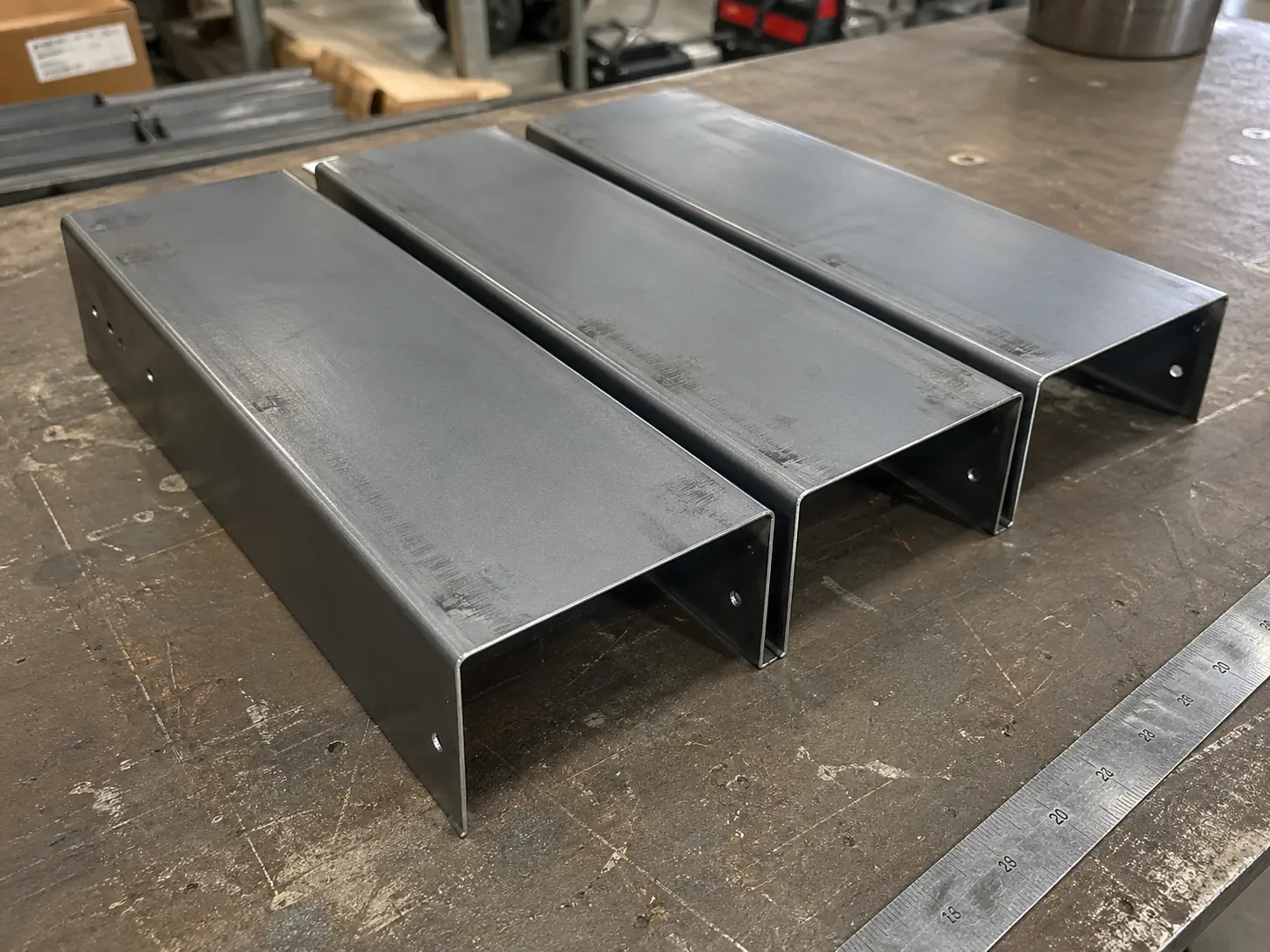
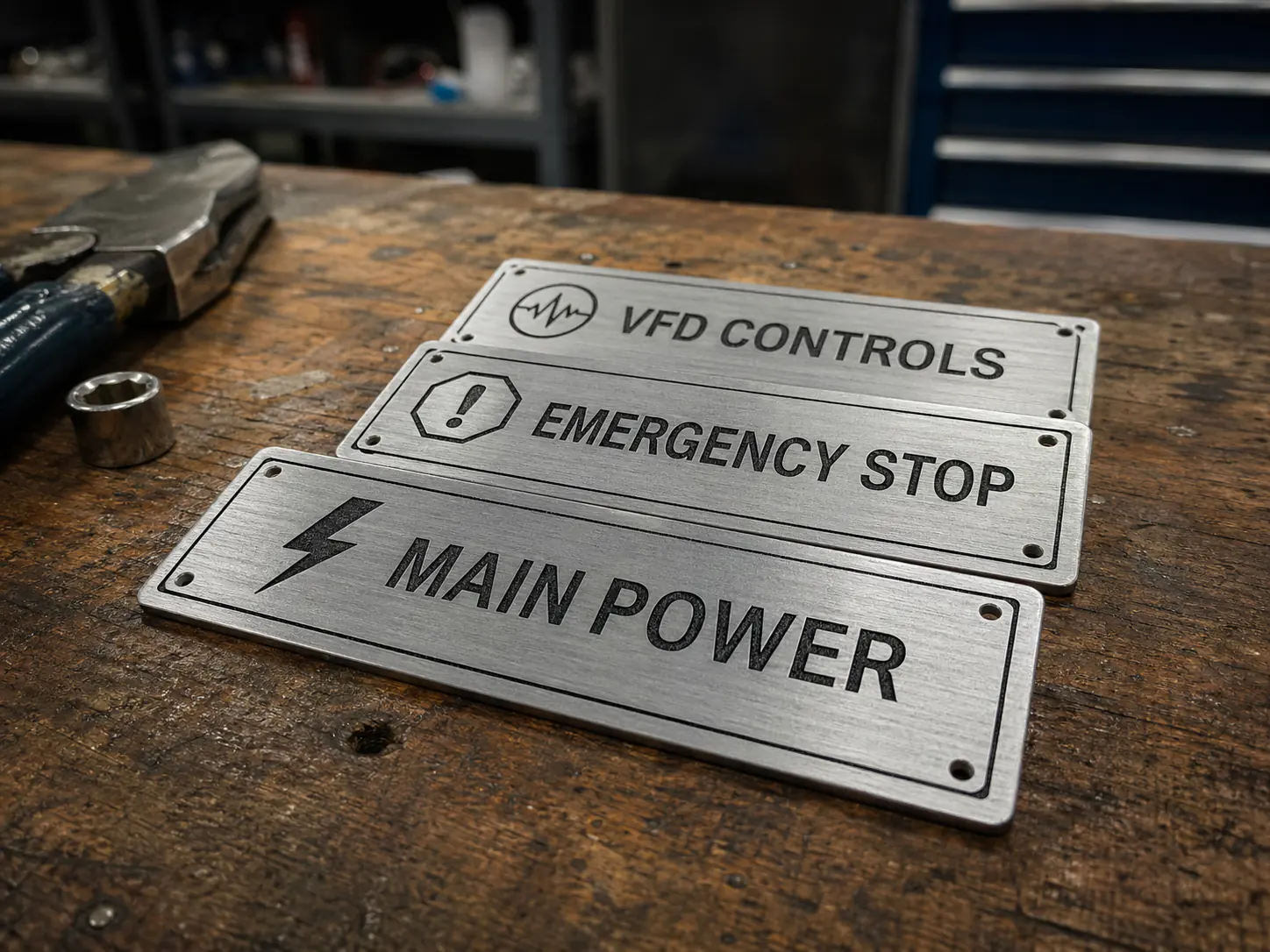
Brackets, gussets, plates, machine guards, signage, decorative panels, prototypes — anything that starts as a flat sheet and ends as a precision part. We cut chassis components for HVAC manufacturers, food-grade enclosures for processing equipment, and architectural panels for designers across the GTA. If it can be drawn in CAD, it can come off the laser.
Why people use it
No tooling cost. A single prototype runs at the same per-piece price as the hundredth, so iteration is free. Programs are reusable, so a re-order three years later cuts to the same tolerances on the same machine. Sheet yields are optimized by the nest — most jobs save 8 to 12 percent of material versus shear-and-mill workflows.
CO₂ vs Fiber Laser Cutting
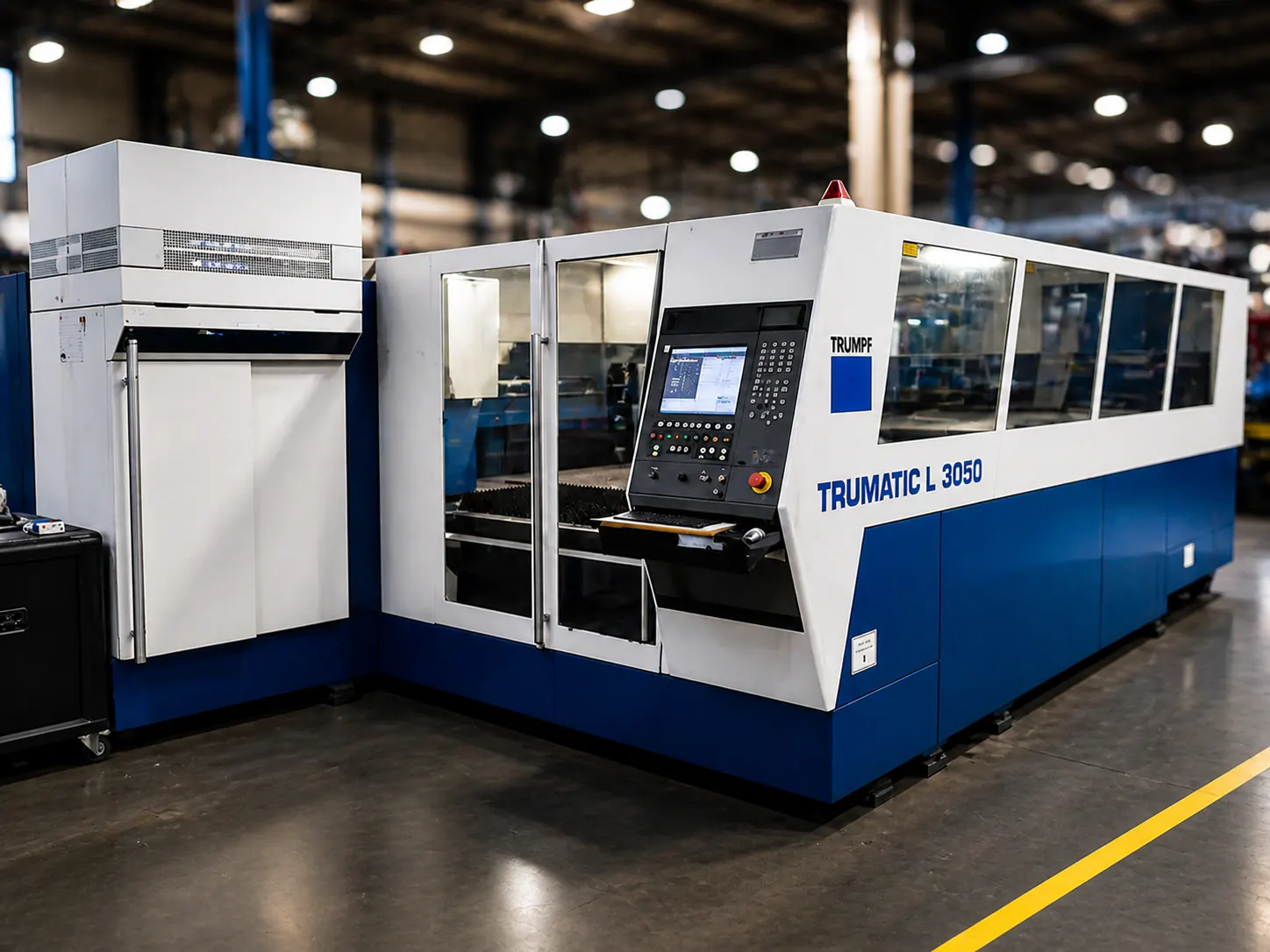
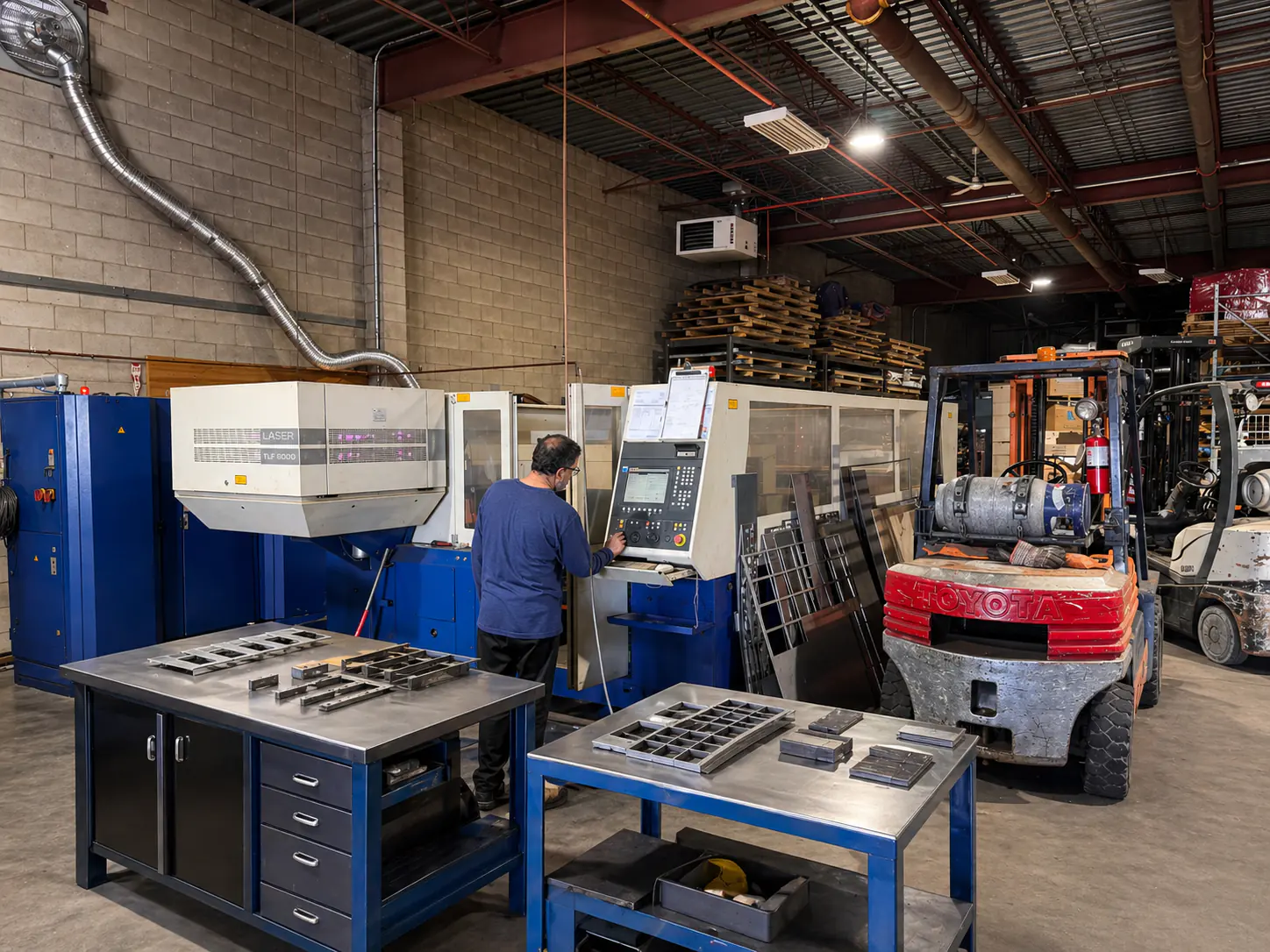
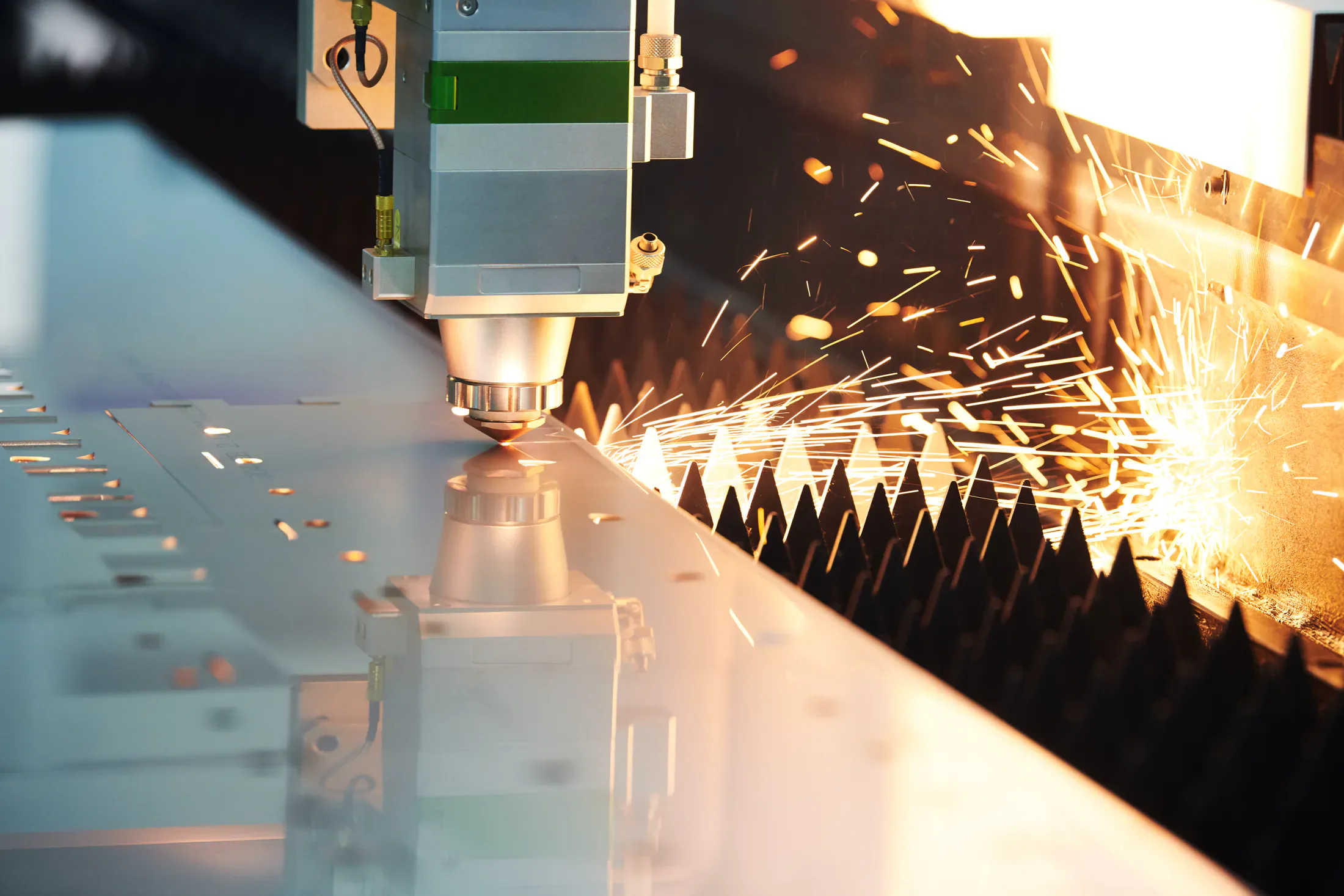
We run a 5kW CO₂ laser (TRUMPF L3050). Fiber lasers — the newer technology — are faster on thin mild steel (under ¼″) and cheaper to run per hour. CO₂ wins on thick stainless and aluminum, and on edge quality. Our L3050 produces an oxide-free edge on 304/316 stainless and on aluminum up to ½″ that most fiber shops can't match without a secondary deburring pass, and it cuts mild steel up to 1″ at production speed. For thick-section parts, decorative finishes, and any job where the cut edge ships visible, CO₂ is the right tool. If your part is sub-¼″ mild steel in high volume, ask us — we'll quote the job and tell you honestly which technology fits.
What we hold to
±0.005″ repeatable across the 60×120″ bed. Mild steel up to 1.00″, stainless up to .75″, aluminum up to .50″. First-article inspection on every tight-tolerance job. Same machine, same fabricator, every run — programs and certs stay on file for re-orders.